

Updated: 01-12-2025
Everything you should know about Artificial Tears
The use of screens, air conditioning, heating… means that more and more people suffer from dry eyes.
Symptoms such as itching, tearing, blurred vision, red eyes, light sensitivity, eye pain, and eye strain can be alleviated with artificial tears.
The habits of today’s society, with the increasing use of screens and closed environments with heating or air conditioning, affect eye moisture, so there are more and more people who suffer from dryness and discomfort in their eyes.
Symptoms such as itching, tearing, blurred vision, red eyes, sensitivity to light, eye pain, and eye strain when watching television, reading, driving, or using a computer or tablet are signs of dry eye.
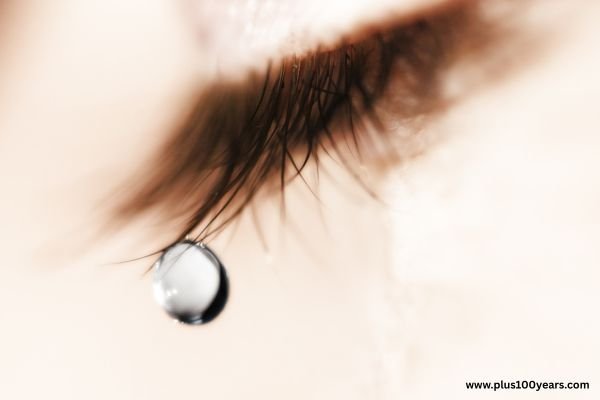
For this reason, artificial tears are increasingly being prescribed. We tell you what they are for, when it is recommended to resort to them, and why you should not overdo their application.
WHAT ARE ARTIFICIAL TEARS
Artificial tears are a pharmaceutical product that is administered ophthalmically in order to relieve the discomfort caused by dry eyes.
The most used active ingredients in artificial tears are Carboxymethylcellulose and Hyaluronic Acid, with this component being the most recommended.
Artificial tears work by supplementing or stabilising the natural tear film of the eye, which is made up of three layers: lipid, aqueous, and mucin. When one of these layers becomes deficient, dryness and irritation occur.
By restoring moisture, reducing evaporation, and forming a protective coating, artificial tears help improve lubrication and comfort. They can also support the healing of minor corneal surface damage caused by dryness or environmental stress.
IN WHAT CASES IS ARTIFICIAL TEARS RECOMMENDED?
The use of artificial tears is recommended in cases where dry eye syndrome is diagnosed to help mitigate the symptoms that this causes.
Artificial tears can also be useful, if they are cold, in patients who have allergic conjunctivitis. And in the case of patients who suffer from blepharitis, they may suffer from complications such as dry eye, so their use can be recommended.
In addition, artificial tears can be used after an eye intervention (refractive surgery, cataracts…) or in case of dry eyes caused by air conditioning, heating, pollution, or the use of screens.
TYPES OF ARTIFICIAL TEARS
Different types of artificial tears can be purchased, and depending on the pathology and discomfort of each person, it will be better to opt for one or the other.
“Every eye is different, and thus different types of artificial tears are there according to the degree of dry eyes. Thus, not all fake tears serve all individuals similarly, and the ophthalmologist needs to recommend the most suitable item for each situation”, according to JLR Eye Hospital.
According to the president of the Spanish Society of Ocular Surface and Cornea:
- The most important thing is that artificial tears do not have preservatives in their formulation, whether they are single-dose or multi-dose eye drops because preservatives cause dry eyes, just what you want to treat with artificial tears.
- On the other hand, the price is important because the best-selling tears are with hyaluronic acid, and not all are of the same quality. Normally, the ones that are more expensive tend to have a high molecular weight hyaluronic acid, which is better.
- For those patients who have blepharitis, the best option is tears that have liquids in their composition, since this way the tears will evaporate less.
Other commonly used ingredients include glycerin and propylene glycol, which help retain moisture and provide soothing relief. PEG (polyethene glycol) and povidone create a smooth protective layer that reduces friction during blinking.
For evaporative dry eye or meibomian gland dysfunction, lipid-based drops are especially effective because they restore the oily layer of the tear film.
Some formulations contain electrolytes and osmoprotectants, which help protect the surface cells of the eye from dehydration and stress. Gel-based or carbomer drops offer longer-lasting hydration, especially useful for nighttime use.
RECOMMENDED FREQUENCY OF USE
For the treatment of dry eyes, artificial tears are the first step.
Dry eye is a chronic disease, so if the patient needs artificial tears, they will have to use them for a long time, especially in dry situations such as using computers, reading, watching television, driving, etc.
As Animesh Rai explains, in a mild dry eye, they could be used three or four times a day, depending on their viscosity:
- Tears that are in gel format last longer on the eye, about three or four hours.
- The effect of a liquid artificial tear lasts a couple of hours.
- And if the patient needs a longer duration, an ointment should be applied. The problem with the ointment is that it causes blurred vision, so it is usually applied at night.
On the other hand, a patient who has moderate dry eye needs something more than artificial tears, usually the use of anti-inflammatories.
So when a person needs to apply artificial tears more than four times a day, it is necessary to move on to a second therapeutic step, such as anti-inflammatories, tear tampons, etc.
It is important to monitor the maximum expiration time indicated on the bottle; after that date, they should not be applied, as it could be counterproductive.
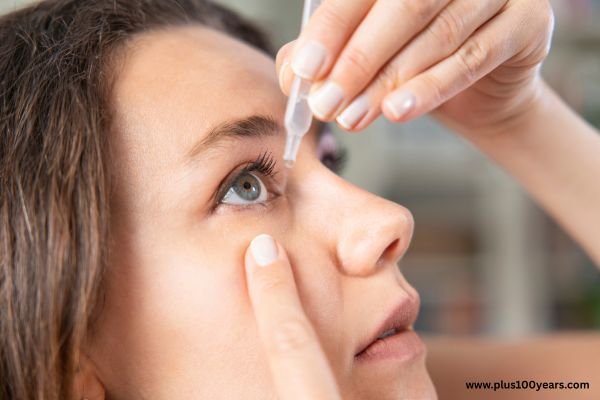
CAN IT BE BAD TO OVERUSE IT?
As with the taking or application of any type of drug, it is advisable to follow the guidelines indicated by the specialist.
In the case of artificial tears, applying them too frequently is counterproductive because the patient will wipe away the few natural tears they have.
The natural tear is much more complex than the artificial one since it contains more than 500 dissolved substances, each one with its function, be it protective, anti-infective, nutritious… and no artificial tear comes close to being similar in that sense.
Also Read :
Easy Ways to Improve Your Eyesight Naturally
Cooling Effect of Cucumber on Eyes
Eyelid Problem in Kids (Ptosis)—Symptoms, Causes, Treatment