

Updated: 31-08-2026; Author: Joey Dua is a BAMS student and runs Darakhtveda, an Indian Ayurvedic brand whose first product is I-Care Eye Drops. He writes about eye care, drawing on the classical Ayurvedic texts and on what the published research actually shows.
This wellness blog post explains about Herbal Eye Drops: What’s Proven, What’s Not?
Ask at any chemist counter for something for tired eyes, and you will not be short of options. Green cartons.
A Sanskrit name in a serif font, a back panel about screen strain and late nights, a price sitting just under the imported brand beside it.
Then go looking for the studies behind the cartons. The shelf is crowded, and the evidence is close to bare, and the gap is not total. Trials exist.
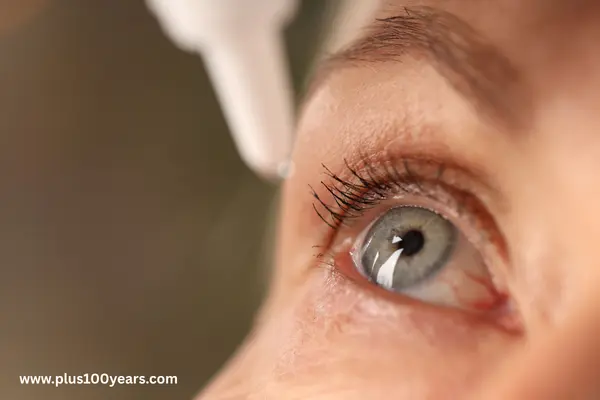
Perhaps half a dozen are worth a careful reader’s time, and every one of them says something more complicated than the box does.
I am a BAMS student, and I sell an eye product, so I have every commercial reason to round these findings upward. I would rather not.
Here is what has been measured, in whom, for how long, and where the measuring stops.
The strongest trial in the category is thirty years old
The best-masked evidence for herbal eye drops as a class is a 1996 trial by Biswas, Beri, Das and Mongre in the Journal of the Indian Medical Association: multicentric, randomised, double-masked, placebo-controlled, 157 patients.
Those 157 were not 157 people with one complaint. They were spread across five unrelated conditions: cataract, dry eye syndrome, ocular asthenia, refractive errors and allergic conjunctivitis.
The polyherbal drop was reported to be better than placebo in dry eye syndrome and in ocular asthenia, with no short-term or long-term side effects reported, and the abstract reports no benefit over placebo for cataract or for refractive error.
Split 157 people five ways, and every subgroup is small. The dry eye group is a fraction of the total, and the abstract does not say what fraction.
No effect size, no confidence intervals, only a direction of travel. The study predates the CONSORT reporting standard, was not registered, has no published protocol, and says nothing about the investigators’ relationship to the marketed product.
Analysing cataract patients alongside allergic conjunctivitis patients is not a design a serious journal would accept now.
That is the ceiling of the category, not its floor.
The castor oil study everyone quotes
You will have seen the claim that castor oil is clinically proven for dry, gritty eyes. It traces back to one paper, and the paper is real.
Goto, Shimazaki and colleagues published a randomised, double-masked, placebo-controlled crossover trial in Ophthalmology in 2002. Forty eyes, twenty patients, all with non-inflamed obstructive meibomian gland dysfunction, a blockage in the oil glands of the lid.
Drops six times daily for a fortnight, then placebo for a fortnight, with symptoms, tear break-up time, tear evaporation, staining scores and gland orifice obstruction measured at the end of each period.
The authors concluded the drops were effective and safe in that condition.
Read the methods and the substance stops matching the claim. What was instilled was a manufactured, homogenised emulsion of 2 per cent castor oil with 5 per cent polyoxyethylene castor oil as a synthetic emulsifier, sterilised for use in the eye.
That is not the bottle sold for hair and constipation. Same plant, different concentration, different preparation, different sterility.
Twenty patients, two weeks per arm, one narrow gland condition, and no replication of that formulation at scale.
There is a second layer here, and it is the most useful thing in this article.
A large share of “studies show castor oil” claims do not trace to that trial at all. They trace to Sandford, Muntz and Craig in Clinical and Experimental Optometry, 2021, under the title “Therapeutic potential of castor oil in managing blepharitis, meibomian gland dysfunction and dry eye”.
That paper is a narrative review. It enrolled nobody and pooled no data, and the properties it discusses- antimicrobial, anti-inflammatory, antioxidant, wound-healing- come largely from laboratory and non-ocular work.
The word “potential” is in the title. It falls out somewhere between the journal and the product page, and a review of possibilities gets reprinted as a list of proven benefits.
Triphala, and the arm that had no triphala in it
Triphala is the herb Indian readers are most often told to use for their eyes. The eye wash, netra prakshalana, is ordinary household advice, passed on by grandmothers and by a great many websites.
Search for a placebo-controlled trial of triphala in the human eye, and you will not find one.
What exists is an open-label randomised comparative trial published in Ayu in 2020, from the Shalakya Tantra department at Sri Dharmasthala Manjunatheshwara College of Ayurveda, Hassan.
Thirty patients with Shushkakshipaka, which the authors correlate with dry eye syndrome, were divided into two groups of fifteen: one received Triphala Ghrita Tarpana, the other Goghrita Manda Tarpana.
Tarpana is not a drop. It is the classical procedure of pooling 10 to 15 ml of medicated ghee over the open eye inside a ring of dough, in the afternoon, for seven days.
Both groups improved, and improved almost identically: moderate relief, defined as 50 to 75 per cent, in 73.3 per cent of patients in both, and marked relief in 26.7 per cent in both.
Relief was reported in gritty feeling (74 per cent), blurred vision (65 per cent), burning sensation (72 per cent), photophobia (78 per cent) and congestion (83 per cent).
Goghrita Manda contains no triphala. It matched Triphala Ghrita on the relief categories and did better on three symptoms immediately after treatment.
Any page citing this study as support for triphala is citing a trial in which removing the triphala changed nothing.
The design could not separate much in any case. Open-label, so patients and assessors knew who got what, and with no placebo and no untreated group, nothing here distinguishes the herb from the ghee, the warm procedure, seven days of clinical attention, or the ordinary tendency of eye discomfort to come and go. Fifteen patients per arm, seven days, subjective relief categories.
The eye wash itself, the form everybody actually recommends, has never been through a controlled trial.
The herb that was tested properly and did not work
Eyebright, Euphrasia, is usually assumed to be folk medicine with nothing behind it. It has the best-designed eye-drop trial of any herb here.
A randomised, double-blind, placebo-controlled trial by Meier-Girard and colleagues in Frontiers in Pediatrics, 2020, screened 114 preterm neonates with ocular discharge at the University Children’s Hospital in Bern and randomised 84.
One drop of Euphrasia or of 0.9 per cent sodium chloride in each eye, four times daily, for 96 hours, with the primary outcome set in advance: no discharge at 96 hours and no topical antibiotic during the window.
Euphrasia: 22 of 40, or 55.0 per cent. Saline: 21 of 41, or 51.2 per cent. The p-value was 0.85.
Secondary trends for reddening and tearing leaned towards Euphrasia without reaching significance.
In the subgroup that did not go on to receive topical antibiotics, relapse of discharge was significantly higher in the Euphrasia arm, which is one signal inside a trial the authors themselves call underpowered.
Preterm newborns are also not adults with screen-tired eyes, and the result does not transfer.
Eyebright is not untested. It was tested carefully, and it did not beat salt water.
Honey, and the distance between a trial and a jar
Honey looks like it belongs on the list of things with nothing behind them. It does not, and getting this wrong in either direction misleads people.
Albietz and Schmid published a randomised controlled trial in Clinical and Experimental Optometry in 2017: 114 participants with evaporative dry eye from moderate to advanced meibomian gland dysfunction.
After two weeks of conventional therapy, they were randomised to an antibacterial Manuka eye gel at 98 per cent Leptospermum honey (37 people), a Manuka lubricant drop at 16 per cent honey (37 people), or conventional therapy alone (40 people).
The authors concluded the standardised preparations were effective as adjuncts, and a later assessor-masked trial of the 16 per cent product also reported improvement.
Two things constrain that. The trial was open-label, with neither participants nor investigators masked, which matters when the outcome is how comfortable a person says their eyes feel.
Both honey arms sat on top of conventional therapy, so what was tested is honey added, not honey instead.
The product is a sterile, standardised, pharmaceutical-grade Leptospermum honey made for ophthalmic use, and a published systematic review of this literature notes that limitations in the included studies and in the analytical methodology affect how far its conclusions can be relied on.
The trials and the kitchen shelf share a word, not a substance. Raw honey is not sterile and can carry bacterial spores.
Gulab jal, and what “no evidence” means
Rose water is probably the most widely used home eye remedy in India, and the one with the least behind it.
No controlled clinical trial of rose water instilled in the human eye surfaced on PubMed. What exists is laboratory work, such as a 2017 in-vitro study by Maruyama and colleagues in the Biological and Pharmaceutical Bulletin, which tested diluted Rosa damascena hydrosol against Candida albicans and MRSA, both associated with skin infection, and against neutrophil adhesion.
No patients, no eyes, nothing measured on a tear film. Rosa damascena does have clinical trials elsewhere, in gastrointestinal complaints, dysmenorrhoea and migraine, and none of them is ophthalmic.
Activity in a dish has repeatedly failed to translate into benefit on the ocular surface, which is wet, blinking and populated, with defences of its own.
Commercial rose water is also not manufactured as a sterile ophthalmic product, and an opened bottle is not sterile.
Reading a bottle
When a label says clinically proven, ask what was proven, in how many people, over how many days, and against what.
No comparator, no claim. A study with no placebo and no masking, where everyone knew what they were getting, and the outcome was how the patient said they felt, tells you very little about the ingredient and a fair amount about attention and expectation.
Check that the thing tested is the thing sold. That question alone disposes of most castor oil and honey claims on the Indian internet.
Sterility, not naturalness, is the property that matters for anything going near an eye.
New pain, discharge, light sensitivity or any vision change is a reason to see an ophthalmologist promptly rather than to try another remedy.
Gritty tiredness at the end of a long day at a screen is a different matter, and comfort measures are reasonable there.
What the evidence does support for screen-tired eyes is duller than anything in a bottle: regular breaks, full blinks, sensible light.
I went through what the 20-20-20 rule helps with, what it cannot do, and how to actually keep it separately, including the two 2023 trials that disagree with each other.
Two kinds of knowing
None of this makes the traditions worthless. Triphala, ghee and gulab jal are cupboard items in most Indian homes, used for generations by people paying close attention to their own bodies, and that record is real knowledge of a particular kind.
It is not the same kind of knowledge as a controlled trial, and neither converts into the other.
Long use tells you a practice persisted. A trial tells you whether an effect survives once you remove the knowing, the hoping and the attention, and hold everything else steady.
The category is thin, and thinner the closer you look. Anyone selling you something for your eyes should be willing to say so.
Joey Dua is a BAMS student and runs Darakhtveda (darakhtveda.com), an Indian Ayurvedic brand whose first product is I-Care Eye Drops.
Also Read :
Desi Skincare Secrets: Natural Beauty Tips for Oily, Dry & Sensitive Skin
Easy Ways to Improve Your Eyesight Naturally