

Updated: 27-07-2026; Author: Akshata is a content writer specialising in healthcare, careers, and workforce trends.
The Most In-Demand Healthcare Careers in India: From Doctors to Radiologists
In recent times, a career in the healthcare sector has transformed in terms of perspective. In earlier times, when a student used to opt for a medical course, then only the career option of being a doctor used to be emphasised.
However, today’s scenario is different.
The Indian healthcare sector has developed and diversified over the past few years.
With the emergence of multispecialty hospitals, advanced diagnostics centres, speciality clinics and technology-driven healthcare services, new job avenues have emerged for medical professionals that were not available some decades ago.
Explore here how the future of the healthcare sector in India?
Besides, increasing age of the population, greater understanding of the importance of preventive healthcare and rising demands for quality medical service have led to an increase in demand for professionals from different sectors.
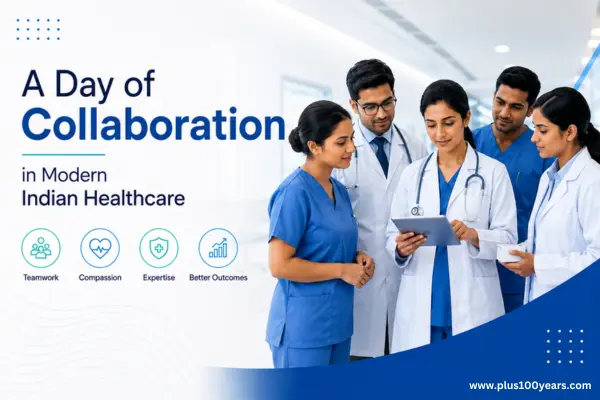
In today’s era, the role of any single profession in healthcare cannot be denied.
Every treatment or therapy program requires the coordinated efforts of doctors, nurses, pharmacists, lab technicians, radiologists and many more.
Healthcare Is Becoming a Team Effort
Enter any contemporary hospital, and you will immediately see that the delivery of patient care is a collective effort.
When a patient presents at the emergency room, the initial assessment may involve the services of a doctor, monitoring from the nurses, lab tests performed by the laboratory technologist, diagnostic imaging scans evaluated by a radiologist, consultations with the pharmacist, and then the patient can go back home.
Every specialist brings his/her unique expertise at various stages of the process.
This collaborative method has completely changed the recruitment strategy of hospitals. Instead of only recruiting one group of specialists, hospitals are building strong multidisciplinary teams.
This has subtly changed career prospects in the sector.
Doctors Continue to Lead Clinical Care
The role of doctors is undeniably central to the process of diagnosis and treatment planning.
With hospitals offering more specialised services, demand for physicians specialising in areas such as internal medicine, emergency medicine, paediatrics, orthopaedics, oncology, anaesthesia, and critical care is very high.
Each of the specialities may have a particular career path; those who opt for further education can have a chance to engage with complicated patients, use advanced equipment, and collaborate with multidisciplinary teams.
This is one of the reasons why some of the highest-paid doctors in India are specialists in such areas as cardiology, neurosurgery, gastroenterology, and interventional radiology.
However, apart from the salary, other aspects like research and teaching are becoming very important for physicians today.
Nursing Is Growing Beyond Traditional Roles
No other profession has transformed as much as nursing.
In addition to monitoring patients and attending to them, today’s nurses coordinate care, prevent infections, educate patients, respond to emergencies and make clinical decisions.
The more specialised healthcare becomes, the more specialised the field of nursing. So, Nursing is one of the most demand Medical Careers In Demand For The Future in India
ICU nurses, oncology nurses, neonatal ICU nurses, dialysis nurses, and OR nurses are some of the examples.
Nursing specialisation has offered many paths of professional development while enabling nurses to build knowledge and skills in those specialities which suit them best.
For anyone interested in nurse jobs in India, specialisation has become one of the most important factors of career advancement.
Pharmacists Are Becoming Clinical Partners
The function of pharmacists has been quietly but surely transformed.
In most cases, hospital pharmacists contribute to prescription reviews, drug interaction checks, patient counselling, and safe medication decision-making for clinicians.
This development can be considered part of a bigger trend of the transformation of medicine into multidisciplinary healthcare with a focus on better health results through medication management.
Hospital pharmacists’ activities are being transformed into more specialised ones that involve participation in antimicrobial stewardship programs, medication safety activities, and evidence-based treatment.
Diagnostics Are the Foundation of Modern Medicine
Medical decisions are always based on correct information.
It is necessary to identify infections, control chronic diseases, and find complex diseases; all of these require laboratory investigations.
The specialists who conduct these investigations remain unseen by patients but are needed in almost every department of a hospital.
New technologies allow laboratory specialists to use molecular diagnostics, automation, and preventive testing, which allows them to perform their functions using more advanced equipment and take care of patients directly.
Radiology Is Where Medicine Meets Technology
The field of medical imaging has revolutionised the healthcare sector within the past twenty years.
With applications in emergency medicine, cancer treatment, and surgeries, imaging has proven to be a critical tool in modern medicine.
Technologies such as MRI scanning, CT scanning, ultrasound, digital radiography, and PET scans have made it possible for physicians to diagnose diseases quickly and accurately.
Advances in the field have been responsible for bringing about change even within the discipline.
The radiologists of today work together with specialists from other fields when deciding on a course of treatment with new advances in imaging through AI.
Professionals who love to combine both medicine and technology will find radiology to be one of the most exciting specialities in healthcare.
Opportunities Are Expanding Beyond Metropolitan Cities
For long, career advancement in the field of healthcare has been linked with big cities. Although places like Mumbai, Delhi, Bengaluru, Chennai, and Hyderabad remain centres of attraction, there is much more balance in the scenario now.
Private hospitals are setting up in Tier 2 and Tier 3 cities, while the government is working on developing district hospitals and CHCs.
This has not only helped provide good quality healthcare in areas where it had not been accessible before but also given options to professionals.
Instead of moving around in search of better chances of advancement, many are finding their success stories in new healthcare centres where they get good infrastructure and more challenging jobs.
Technology Is Redefining Healthcare Careers
Technological change has become a major contributor to changes in the field of healthcare.
Electronic medical files, digital imaging, teleconsultations, robotic-assisted operations, and artificial intelligence have become a norm in clinical practice for many organisations.
Instead of substituting professionals in this sphere, technological advancements help healthcare practitioners make better decisions in a shorter time frame.
The development in technology has led to changes in the requirements from employers.
Hospitals have become more concerned about their employees’ ability to work with new technologies and constantly learn. It does not matter whether you are a nurse, pharmacist, diagnostician, or even an administrator; technological skills are vital.
Skills That Matter Beyond Clinical Knowledge
However, degrees and professional certifications are still considered the base for one’s health care career, but employers have started to value other traits that cannot be measured by grades.
Health care workers should have good communication skills, work well with multidisciplinary teams, maintain their composure during tough times, and provide care for their patients empathically and professionally.
The following are some of the important traits which have been identified:
- Good communication skills
- Ethical judgment
- Ability to adapt
- Detail-oriented
- Teamwork
- Compassion
- Problem-solving skills
- Learning capacity
These traits can make a difference between a competent professional and an outstanding one.
Lifelong Learning Is Becoming the New Standard
One of the rare careers where you can learn throughout your entire working life is healthcare.
As medical research advances and the methods of treatment and technology develop, those professionals who keep themselves updated become better prepared for leadership and specialised positions.
Attending workshops, getting extra certification, going to conferences, and reading about the latest developments in this field will help to build a good career. In many organisations, professional development becomes a sign of devotion to quality service for patients.
A Promising Future for India’s Healthcare Workforce
The demand for professionals in this field would continue to grow, as India keeps investing in medical facilities, specialised treatment centres, diagnostics, and prevention programs.
This growth would go far beyond just one profession.
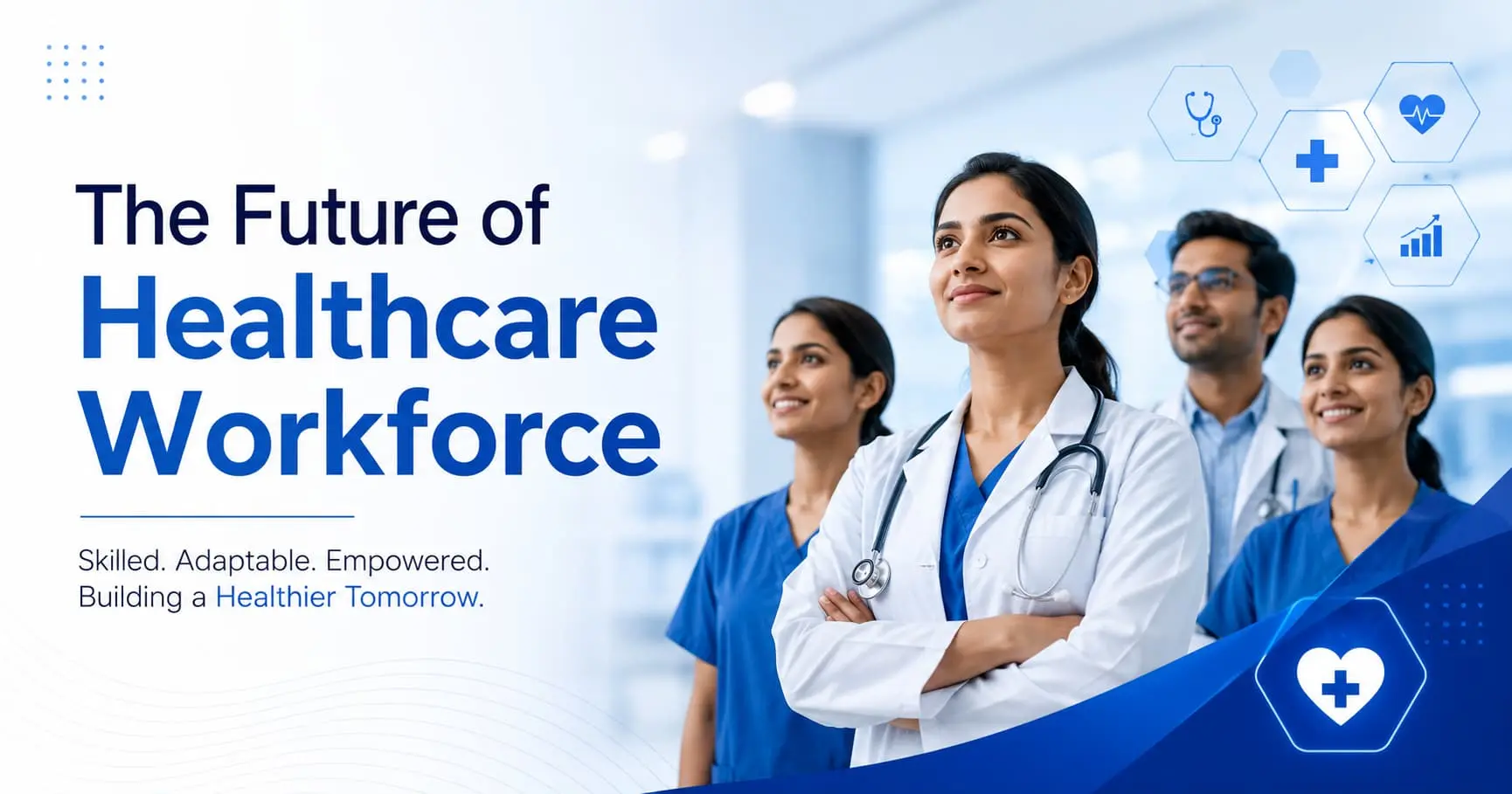
Although doctors would always be central to patient care, the future of healthcare would also depend greatly on nurses, pharmacists, lab technicians, radiologists, therapists, technologists, and many other specialists working together daily.
For people considering Healthcare Jobs in India, there is more than enough room for development in this field now, compared to what it was before.
However, success is not based solely on academic credentials anymore.
More and more companies look for professionals who can not only possess solid knowledge and skills but also adapt quickly, cooperate, and improve patient outcomes.
In conclusion, the most satisfying career in the field of healthcare should not only rely on knowledge and experience but also on purpose.
People who keep learning and innovating would find a great place in the developing Indian healthcare system and in their careers as well.
Author Bio: Akshata is a content writer specialising in healthcare, careers, and workforce trends. She enjoys creating informative, research-driven articles that help healthcare professionals navigate career opportunities, industry developments, and professional growth. Her work focuses on delivering practical insights that are both engaging and valuable to readers.
http://www.linkedin.com/in/akshata-bhat-08658228a
Also Read :
Physiotherapist in Vepuru Swarnalatha
Share Your Expertise: Write for Us On Wellness!