

Updated:31-10-2026 ;
The healthcare industry generates a large amount of information each day. Hospitals, clinics and healthcare professionals keep records of patient diagnoses, treatments, medical procedures and services.
How do insurance companies and healthcare organisations organise and understand all this information?

This is where Medical Coding becomes important.
Medical Coding turns diagnoses, procedures and services into standardised alphanumeric codes. These codes help hospitals keep records, process insurance claims, and manage healthcare information.
For pharmacy graduates, Medical Coding is one of the high-paying career options. “ If you are a student or recent graduate and want to start kick-start your career in medical coding, PMCTI offers a medical coding course covering basics to advanced concepts to get you industry-ready. “
Their knowledge of pharmacology, human anatomy, physiology and diseases gives a foundation for entering this field.
What Is Medical Coding?
Medical Coding translates information from records into standardised codes. These records may contain details about a patient’s diagnosis, medical procedures, laboratory tests and treatments.
For example, when a doctor diagnoses a patient with diabetes, the diagnosis is written in the patient’s file.
A Medical Coder looks at this information. Assigns the correct code with an established coding system.
These codes make healthcare information easier to organise, share and process.
Some used coding systems are ICD, CPT and HCPCS. ICD (International Classification of Diseases) classifies diseases and medical conditions.
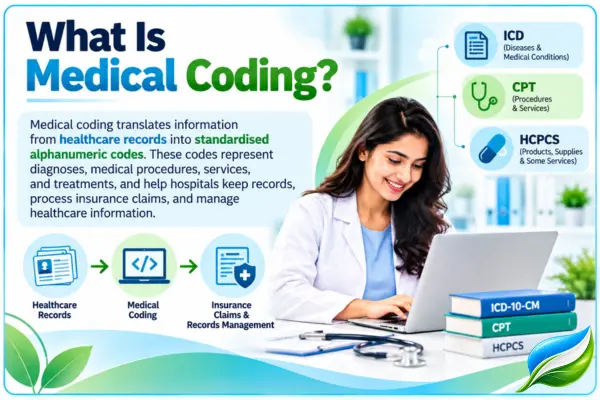
CPT (Current Procedural Terminology) represents procedures and services. HCPCS (Healthcare Common Procedure Coding System) classifies healthcare products, supplies and some services in the United States.
What Does a Medical Coder Do?
A medical coder works with records and healthcare documents. Their main job is to make sure that medical information is turned into codes.
They look at papers, find out what the sicknesses and treatments are, and put the right codes on them using rules that are already set.
Medical coders also check the records for anything that’s missing or not clear.
They help keep the records correct, help with insurance claims and make sure that patient information is kept private.
Medical coders do not look at patients or give them medicine. They use the information that is already written by doctors and other people who are allowed to work in healthcare.
What Will You Learn in a Medical Coding Course?
A basic medical coding course teaches students about words, body parts, sicknesses and how to use coding rules. It helps students learn how to read papers and put the right codes on them.
Medical terminology is one of the important skills taught in a medical coding course. Students learn words that are used for sicknesses, parts of the body, symptoms and treatments. This helps them understand papers more easily.
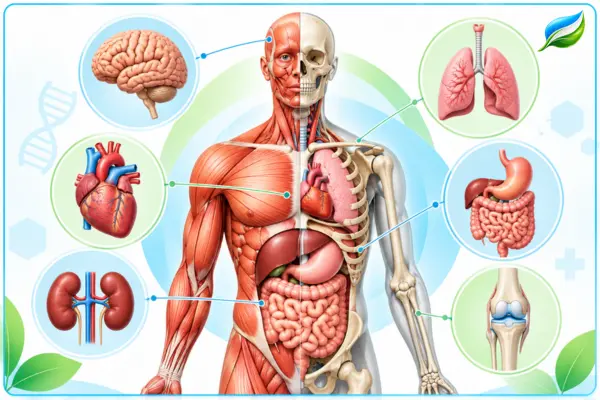
Human anatomy and physiology are also parts of the course. Students learn about the way parts of the body work and what they do.
This helps them understand what is wrong with patients and how medical reports describe it.
Another important part is ICD-10-CM coding. This teaches students how to put diseases and medical problems into codes using the rules.
Students also learn about CPT and HCPCS coding systems. These are used to show treatments, services and supplies.
The course may also teach about records coding rules and keeping patient information safe.
Students learn how to look at papers, find what is important, follow the coding rules and make sure that the codes are correct when dealing with private health data.
Who Is Eligible for a Medical Coding Course?
Medical coding is good for students who come from healthcare and life science backgrounds.
Students who have a B.Pharm, M.Pharm, B.Sc. Life Sciences, biotechnology, microbiology, nursing or other similar areas are eligible to work as a medical coder.
Most basic courses do not require any experience in coding. The rules for joining can change from one school to another.
Pharmacy graduates have a head start because they already know about medicines, sicknesses and medical terms.
They might need some training in coding systems, medical records and coding rules before they can get a job.
Skills Required to Become a Medical Coder
Medical coding does not usually need high-level computer skills. Students need to be careful and pay attention to details.
A small mistake in coding can cause problems with records or insurance claims.
A basic knowledge of words, body parts, how the body works and sicknesses is also important.
Thinking in a certain way helps coders look at medical information and choose the right codes.
Also knowing how to use a computer being able to talk and keeping information private are helpful in daily work.
Let’s take a look at the 7 core skills needed for the medical coder
1. Attention to Detail: Ability to carefully review medical records and ensure accurate coding, billing, and documentation while minimising errors.
2. Medical Terminology: Understanding of medical terms, abbreviations, and clinical language used in diagnoses, procedures, and healthcare documentation.
3. Knowledge of Coding Systems: Familiarity with ICD-10-CM, CPT, and HCPCS coding systems to accurately classify medical diagnoses and procedures.
4. Analytical Skills: Ability to analyse medical records and insurance claims, identify discrepancies, and ensure accurate coding and billing.
5. Communication Skills: Ability to communicate clearly with healthcare providers, insurance companies, and patients to resolve billing queries and related issues.
6. Knowledge of Insurance Policies: Understanding of health insurance plans, billing procedures, and claim requirements to ensure accurate claim processing.
7. Time Management: Ability to prioritise coding and billing tasks, manage workloads efficiently, and complete assignments within deadlines.
Graduates with these skills have more opportunities as more companies are looking for skilled workers.
Career Opportunities After a Medical Coding Course
After finishing coding training, graduates can find different jobs in the healthcare field. A medical coder is one of the common starting jobs.
People in this job analyse the documents or papers and put the right diagnosis and treatment codes on them.
Graduates can also try billing jobs, where they work with billing and insurance claims.
With experience, they can move into jobs like clinical coding specialist, coding auditor or medical records analyst.
Medical coding workers can find jobs in hospitals, healthcare companies that handle billing, insurance companies, billing companies and other healthcare businesses.
With experience and proper certificates, they can get roles in coding, checking and making sure things are done right.
Is Medical Coding a Good Career Option for Pharmacy Graduates?
Medical coding can be a Good Career Option for pharmacy graduates who want to try something different from regular pharmacy work.
Their knowledge of medicines, sicknesses and how the body works gives them a base to start learning medical coding.

A pharmacy degree alone is not enough to be a good medical coder. Students must learn the coding systems, practice with papers and know the rules of the industry.
Certifications, like the Certified Professional Coder (CPC) from AAPC, can help show that someone knows coding and be more trusted. These certifications require passing an exam.
Conclusion
Medical coding allows pharmacy graduates to work in the healthcare records and money side of medicine.
A course that is easy for beginners teaches things like medical words, body parts, ICD coding, CPT and HCPCS.
For students who like healthcare but do not want to work with patients, medical coding is worth thinking about.
Building a base, getting real experience and knowing the coding rules can help graduates get jobs in this area.
Also Read :
Medical Careers In Demand For The Future in india
How to Elevate Your Career Prospects as a Nurse