





Published: 15-09-2026
Take away the coconut chutney from a plate of dosa or idli, and something feels missing. That small bowl served alongside a South Indian food may look simple, but it carries a lot of the flavour people associate with the cuisine.
A coconut in South Indian cuisine has always had a special place because it brings together taste, texture, and balance. It is not just used as a finishing ingredient. In fact, it is used as a main ingredient in many dishes.
This is also why diners exploring a South Indian restaurant often discover that the cuisine offers much more than the popular dishes they already know.
But what makes fresh coconut such an important ingredient in South Indian cooking?
Let us find out!
It Softens Strong Flavours
South Indian cooking often brings together bold ingredients like chillies, tamarind, spices, and tempering. Fresh coconut helps these flavours feel more balanced.
Its mild sweetness and natural creaminess reduce the sharpness of stronger ingredients while allowing their original taste to remain.
Think about a spicy chutney or a tangy preparation. Without coconut, the flavours may feel sharper. With coconut, they come together in a smoother way.
It Adds a Fresh Taste and Pleasant Texture
Fresh coconut gives dishes a texture that other ingredients cannot create. Grated coconut adds a soft bite, while its natural freshness makes simple preparations feel lighter.
This is especially useful in everyday cooking because even basic ingredients can feel different when combined with fresh coconut.
The use of coconut in South Indian cuisine is a good example of how a small ingredient can change the complete feel of a dish.
It Works With Different Ingredients and Recipes
One reason coconut appears across different South Indian regions is that it pairs well with many ingredients.
It can work with:
- Vegetables
- Lentils
- Peanuts
- Spices
- Herbs
The taste of coconut changes depending on what it is combined with, allowing different regions to create their own recipes while keeping the ingredient at the centre.
This flexibility is what makes coconut in South Indian cuisine such a lasting part of traditional cooking.
How Fresh Coconut Is Used in Traditional South Indian Dishes
Fresh coconut can be found in various elements of a South Indian meal. It is not restricted to just one kind of preparation. It could be used in breakfast, the main course, along with rice, and in sweets.
Variations in the uses of coconut give us the reason why coconut is so common in South Indian meals.
Coconut Chutneys With Breakfast Dishes
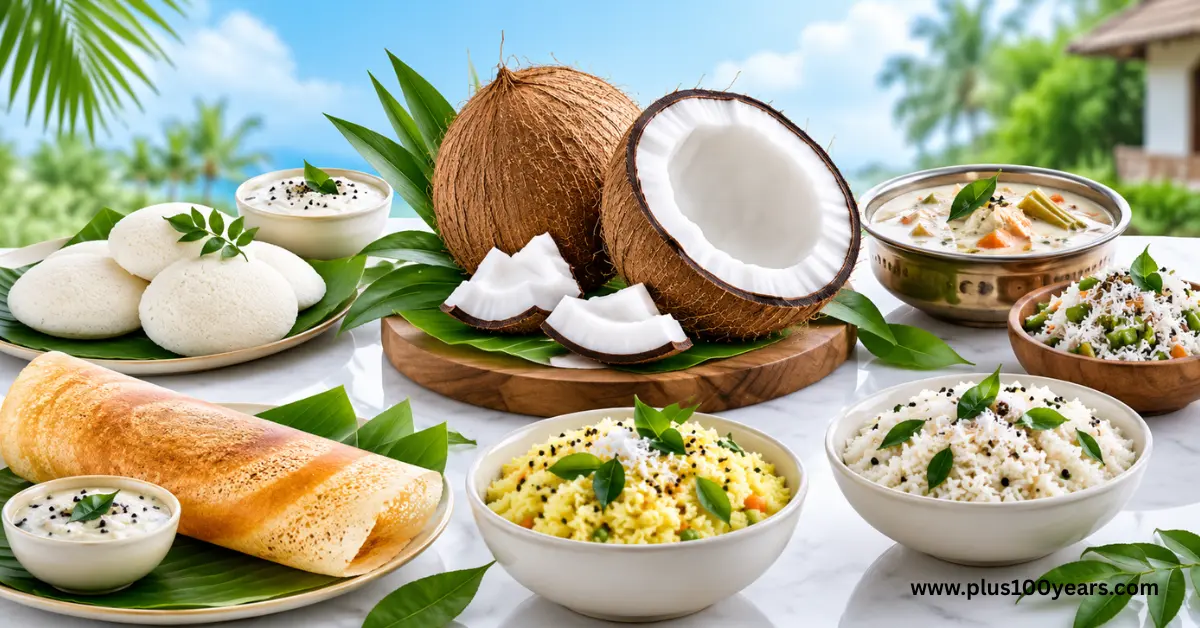
A South Indian breakfast dish will always be served with coconut chutneys that are eaten along with foods such as dosa, idli, and vada.
In a typical South Indian restaurant, these chutneys are made using different methods by mixing coconut with other spices such as roasted chana dal, peanuts, green chillies, and ginger.
Using the same main ingredient, one could come up with different types of chutney.
Coconut-Based Main Course Preparations
Coconut is also found in several traditional lunch and dinner dishes.
For example, dishes like Avial use coconut with vegetables to create a preparation that brings together different seasonal ingredients. Coconut is also used in certain vegetable curries and regional gravies where it becomes part of the main preparation.
These are the kinds of dishes that allow diners at a South Indian restaurant to explore flavours beyond the commonly ordered dosa and idli.
Coconut in Rice and Vegetable Preparations
Dishes made from rice are also examples of the beauty of coconut.
An easy dish called coconut rice is made by adding rice along with coconut, tempering spices, and herbs. There are other local dishes that use coconut along with raw mango and vegetables.
This illustrates the unique way that coconut can be an essential part of daily eating yet add its own distinct flavor to the dish.
Coconut-Based Sweets and Traditional Preparations
Coconut is not only used in savoury dishes. It also finds a place in traditional South Indian sweets and festive preparations.
Sweets like coconut-based payasam and other regional desserts use coconut milk or grated coconut to create their familiar taste and texture.
This wider use of coconut shows why coconut in South Indian cuisine is not limited to chutneys and curries; it is part of different moments of a meal.
Keeping Fresh Coconut Traditions Alive
There is a specific reason why conventional kitchens still favour fresh coconuts over packed coconuts. The process of grating coconuts for chutneys, preparing food with coconuts, and using them at the right time in the cooking process is important.
This is why the trusted Sagar Ratna restaurant chain continues to follow these methods instead of replacing fresh ingredients with shortcuts. It is known for serving classic South Indian preparations and is one example of how traditional recipes continue to be enjoyed by diners across cities.
The Bottom Line
Fresh coconut is not just an ingredient added for flavour. It brings balance, texture, and character to dishes that represent generations of South Indian cooking.
The role of coconut in South Indian cuisine shows how one simple ingredient can shape everything from everyday breakfasts to traditional regional recipes. Exploring these flavours helps people understand why South Indian food is much more diverse than the dishes they already know.