
Updated : 25-11-2026 ; Author : Dr Aradhana Singh -Certified Yoga Therapist .
In This Article: Yoga for Beginners
-
Do You Need to Be Flexible to Start Yoga?
-
Should You Start Yoga Online or Join an In-Person Class?
-
How to Find the Right Yoga Class for Beginners
-
What Should You Wear and Carry to Your First Yoga Class?
-
How to Choose the Right Online Yoga Instructor
-
What Equipment Do You Need to Practice Yoga at Home?
-
How Often Should Beginners Practice Yoga to See Results?
-
Expert Tips: How to Take Your First Step Towards Yoga
If you are one of the many who are thinking of starting yoga but don’t know where to begin, this guide is just for you.
I understand that questions like whether you need to be flexible before starting yoga, whether to join an in-person class or choose online yoga, and how to find a suitable instructor or class are running through your mind.
Don’t be surprised or discouraged; in my 10 years of experience as a yoga therapist and instructor, I face these questions on an almost daily basis.
This encouraged me to write this article to help people overcome their worries and start yoga without further delay.
In this article, I have covered the most common questions that beginners worry about.
1. Do You Need to Be Flexible to Start Yoga?
This is one of the foremost worries; many people wonder how they will do yoga if they cannot touch their toes or sit comfortably on the floor.
Do not worry; start the way you are, even if you can’t touch your toes or sit on the floor. Practising yoga will gradually improve your flexibility and also build strength, balance, and coordination.
If you are unable to touch your toes, talk to your yoga teacher and start with simple standing asanas or asanas with slight modifications, and make use of yoga blocks and other helpful yoga props like straps and cushions.
Your yoga instructor understands that every person’s body is different and will guide you as per your flexibility.
2. Should You Start Yoga Online or Join an In-Person Class?
Now that your worry about being flexible is solved, the next question that may come to your mind is whether you should start online or join a yoga centre.
Both options have their advantages; the selection depends on your schedule and practical issues like travel distance.
If you select online yoga classes, you can practice at home and save travel time. This is especially convenient for working professionals who do not have much time and people who prefer the comfort of their own home.
One advantage of joining a yoga centre is that your teacher is observing you and corrects you if you are not performing the asana correctly. Personal attention is an advantage for beginners.
If you want to find out about yoga instructors and classes near you, I would recommend that you explore Yogic Zone’s Yoga Classes and Instructors Directory. You can search by city name and read about the instructor’s qualifications and experience to help you find a suitable instructor.
3. How Do You Find a Yoga Class That Suits You?
Though the directory has listings from all over the country, not every instructor or class is suitable. Before finalising on the instructor or the yoga centre, be clear about what you want from yoga or what your objective is for starting yoga.
Are you starting yoga to improve your flexibility? Build strength, manage stress, or lead a healthier life?
Keep the following points in mind before you join the class.
The class teaching level: Check whether the class is for advanced yoga students or if they also conduct batches for complete beginners.
The instructor’s qualifications: The instructor should be trained in the style of yoga you want to practice. Beginners can start with Hatha yoga, or if you prefer a flowing practice, start with Vinyasa flow.
Class timings and location: Select a yoga centre whose location is convenient and whose timings are suitable for you. You will be regular in attending if the location and timings suit you.
Trial Class: Do not hesitate to ask if you can attend a trial class. Most instructors allow prospective students to attend a trial class. Clear all your doubts during the trial class.
4. What Should You Wear and Carry to Your First Yoga Class?
You have joined a class or have decided to practice online; now your worry is what to wear. You do not need to buy expensive yoga clothes to start your practice. You can buy yoga wear once you understand what is required for your practice.
I have specifically covered this point, as many women ask me this question. For men, any comfortable T-shirt and track pants or shorts are generally sufficient.
Women are more concerned that clothes should stay in place and should not stretch or become transparent during movement and while bending.
Women can also wear T-shirts and track pants that stay in place or wear a lightweight kurta and leggings if traditional clothes are preferred. Wear clothes that allow free movement and make you feel comfortable.
Check with your yoga teacher if you should bring your own mat; my personal advice from a hygiene point of view is to carry your own personal mat. Carry a water bottle and a small towel if you sweat.
5. How Should You Choose the Right Online Yoga Instructor?
If you prefer to start yoga online, you have to generally follow the same method as I have suggested for evaluating an in-person class.
The instructor should be qualified and experienced in teaching beginners. Contact the online instructor and request a trial online class. Observe how they teach beginners, and observe if they guide students and explain the benefits of the yoga asana.
Check the instructors online comments if they have presence on social media.
I would like to mention that online yoga classes are available in two formats. Live classes where the instructor is demonstrating an asana, and pre-recorded sessions.
The advantage of practising yoga using recorded sessions is that you can do it at your convenience at any time of the day.
The disadvantage is that you will not get any teacher feedback.
I would recommend a hybrid approach for beginners.
Start with an in-person class, once you are confident in the basic asanas and familiar with your instructor’s teaching method, you can then continue online.
6. What Equipment Do You Need to Practice Yoga at Home?
If you have decided to start online yoga, you may be wondering whether you need to buy yoga equipment or props for home practice.
Do not worry; you can start your practice with a yoga mat and buy props later when you need them.
Discuss about the mat thickness and material with your instructor before you buy. A good mat should offer the right amount of cushioning and grip.
Yoga props are helpful, and you may explore them as your practice advances. Here are some yoga props and their benefits.
- Yoga Blocks: The extra support provided by the blocks will help you practice asanas comfortably.
- Yoga Straps: They help you stretch if flexibility is an issue.
- Yoga Cushions: They provide additional comfort and support in certain sitting positions.
You can use alternatives available at home, like sofa cushions and folded blankets, to start with, and buy yoga cushions and dedicated props later.
7. How Often Should You Practice Yoga and When Will You See Results?
We are all eager to see the results of our efforts. Start with 15- 20-minute sessions about 3 to 4 times a week, and slowly increase the duration and frequency as per your instructor’s advice.
There is no fixed timeline for results; it varies from person to person. Everyone’s fitness level is not the same.
But remember to start gently and proceed at the pace your instructor recommends. Avoid long and heavy sessions unless your instructor permits.
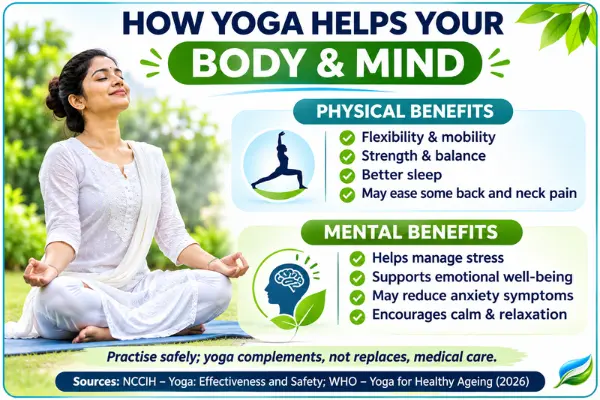
You will see improvement in movement, balance, strength, and flexibility over time with regular practice.
Do not ignore pain and do not hesitate to inform your instructor or consult a doctor if pain persists or you have any past medical issues.
Taking the First Step
As an experienced yoga instructor, my advice to everyone is very simple: do not wait until you become flexible; start with whatever comfortable clothes you have, take your time to select the right yoga instructor or yoga centre.
The Yogic Zone directory will save you time, as all information is available on one website along with helpful articles.
Be cautious about centres that promise or advertise a 100% cure or results. Yoga can help with many ailments but is not a substitute for medical treatment.
Begin your yoga journey today and take the first step to a healthy lifestyle.
Dr Aradhana Singh is a yoga therapist certified by the Ministry of AYUSH, with qualifications in yoga instruction from Patanjali and Bodhi.
She holds an MSc in Counselling and a PhD from Yoga Samskrutham University, Florida.
With over 10 years of experience conducting meditation classes and 4–5 years teaching yoga, she specialises in meditation and yoga therapy.
She has also worked in yoga research and is a bestselling author of a parenting book.
https://www.instagram.com/dr._aradhana_singh_
https://www.facebook.com/share/19ub7hz6Wb/
More Tips About Yoga :
Charge Your Body And Mind: Yoga For Energy And Stamina
Write for Us Yoga — Share Your Yoga Wisdom with Our Readers
5 Effective Yoga Asanas to Reduce HBa1c Levels